Eisenwerk Brühl: 80 tons of liquid iron per hour – managed with [FP]-LIMS
How one of the world’s most important automotive foundry suppliers manages hundreds of chemical and thermal analyses daily – with a chemical analysis every 6 minutes and a thermal analysis every 10 minutes.
- Company
- Eisenwerk Brühl GmbH
- Industry
- Foundry · Automotive supplier
- Edition
- [FP]-LIMS Professional
- In use since
- 2020
Almost 100 Years of Foundry Tradition in the Rhineland
Eisenwerk Brühl is a foundry founded in 1927 in Brühl, Rhineland, Germany. With a capacity of 80 tons of liquid iron per hour, 5,000 molds, and 200,000 cores per day, the company employs more than 1,500 people – making it the largest employer in the region.
The ironworks was founded almost 100 years ago by Georg Sandmann, a pioneer of the steel industry. Even back then, Sandmann envisioned cars becoming the world’s most popular means of transportation – which is why the company specialized early on in the production of cylinder crankcases and cylinder heads.
That vision is still confirmed today. Intensive cooperation with automotive designers, strict quality controls, targeted market orientation and the use of new technologies quickly made Eisenwerk Brühl one of the most important automotive suppliers in history.
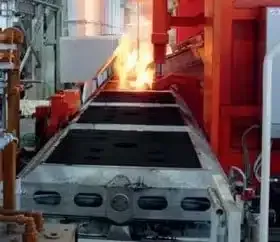
Industrial-Scale Foundry Output – Day in, Day out
Eisenwerk Brühl is one of the largest cast iron foundries supplying the global automotive market. Its production volumes set the bar for what modern quality control needs to handle.
Cylinder Crankcases & Cylinder Heads for the Global Market
The product portfolio includes various engine blocks, cylinder crankcases and cylinder heads for the global automotive market. Eisenwerk Brühl’s engine blocks are high-grade products that meet the most stringent requirements in terms of product quality.
The company has a long tradition of manufacturing high-quality cast iron parts and is known for its excellent foundry technology. The product range is based 100 % on cast iron materials whose material properties can be optimally matched to the end product.
Whether Audi, Fiat, Ford, Opel, GM, Skoda, Suzuki or Volkswagen – products from Eisenwerk Brühl can be found in vehicles of well-known automotive manufacturers worldwide.
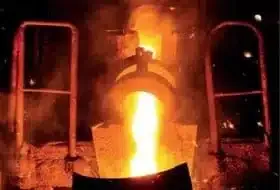
Engine Blocks for the Automotive Industry – Quality Is a Must
The engine block is the heart of a modern powertrain. It converts the thermal energy of fuel into mechanical energy – and must withstand intense heat and pressure from combustion. Compliance with quality standards is therefore not a “nice to have” but an essential safety feature.
Thermal & Mechanical Stress
Engine blocks must reliably handle extreme heat and mechanical loads – no margin for material defects.
Emission & Weight Targets
Less fuel, fewer emissions, less weight, more power per displacement – the OEM bar keeps rising.
Continuous Process Monitoring
Standardized QA systems and qualified personnel ensure only top-quality components ever leave the plant.
Hundreds of Analyses Every Day – at Foundry Tempo
To safeguard quality, Eisenwerk Brühl relies on continuous process monitoring throughout the entire production chain. In the in-house laboratory, analytical work runs at industrial cadence:
The high product quality and delivery reliability are documented by multiple awards and certifications. But the underlying lab data volume needed a modern home – Excel was no longer sufficient.
- A chemical analysis every ~6 minutes
- A thermal analysis every ~10 minutes
- Quality documents for increased self-monitoring & process optimization
Simplified Data Management with [FP]-LIMS
In 2020, Eisenwerk Brühl introduced [FP]-LIMS from Fink & Partner. Since then, large volumes of analysis data converge centrally in the LIMS database – stored securely, captured electronically through measuring instrument interfaces. The plant has gained both speed and traceability.
Centralized Database
All chemical and thermal analyses land in one secure, server-based [FP]-LIMS database.
Devices Connected
Measurement data is captured electronically through device interfaces – no manual transfer needed.
Trend Detection
Beyond data management, the real value lies in spotting trends and process dependencies early.
„The LIMS gives us the opportunity to identify trends at an early stage and, above all, to recognize dependencies and react to them – for example, in order to optimize processes.“Mehmet UcurHead of Laboratory · Eisenwerk Brühl GmbH
What Has Changed Since 2020
Before LIMS
- Hundreds of daily analyses, decentralized data
- Manual recording across labs & production
- Trend detection slow and effort-intensive
- Audit-readiness reliant on paper or Excel
With [FP]-LIMS
- All analysis data centralized server-based
- Electronic device-side data capture
- Early trend & dependency detection
- Documented, traceable quality at automotive grade
Modernizing Your Foundry’s Quality Control?
See in 30 minutes how [FP]-LIMS can support continuous process monitoring, OEM-grade quality documentation and trend detection in your foundry. Free, no sales pressure.