Marienhütte: Reinforcing steel Made in Austria – with [FP]-LIMS since 1994
How Austria’s only manufacturer of reinforcing steel manages 35,000 chemical analyses per year in a 4-shift operation – and what the merge function in LIMS adds to process optimization.
- Company
- Stahl- und Walzwerk Marienhütte GmbH
- Industry
- Steel production · Reinforcing steel
- Edition
- [FP]-LIMS Professional
- In use since
- 1994
Austria’s Only Manufacturer of High-Quality Reinforcing Steel
Concrete is one of the most widely used building materials in the world. In Austria, more than half of all construction work is carried out using reinforced concrete – which makes both concrete and reinforcing steel critical materials for the country’s economy.
Stahl- und Walzwerk Marienhütte GmbH, with its production site in the center of Graz, is Austria’s only manufacturer of high-quality reinforcing steel. “Made in Austria” with great responsibility: Marienhütte reliably supplies the Austrian construction industry with top-grade reinforcing steel.
For quality assurance in the laboratory, the company has relied on [FP]-LIMS, the LIMS Software from Fink & Partner, since 1994.
400,000 Tons of Reinforcing Steel for the Construction Industry – Every Year
Marienhütte produces over 400,000 tons of reinforcing steel annually – in a 4-shift system with 300 employees, almost continuously. Supplied primarily to bending plants and precast factories in Austria, Germany, Czech Republic, Slovakia, Hungary, Slovenia and Croatia.
Standardized Analysis Process for Quality Assurance
Reinforcing steel from Marienhütte is a high-tech product meeting the highest requirements for product quality and workability. Each batch undergoes a rigorous quality assurance process to ensure that every shipment meets the highest standards.
Since Marienhütte steel is produced 100% from scrap, multiple chemical analyses are carried out during the production process in the electric steel mill:
- Pre-sample analysis of melted scrap using Optical Emission Spectrometry (OES)
- Ladle furnace step: alloying elements added, then re-analyzed by OES after homogenization
- Continuous casting phase: chemical analysis repeated during casting
„Even then, with a significantly lower production volume, it became apparent that the data to be managed and the requirements of our customers, approval bodies and certification bodies would keep increasing. Today, we are happy with the decision to have introduced the LIMS – we can realize large production volumes while complying with today’s quality standards and ensure secure, fully traceable documentation.“Marco LacknerHead of Quality Assurance · Marienhütte GmbH
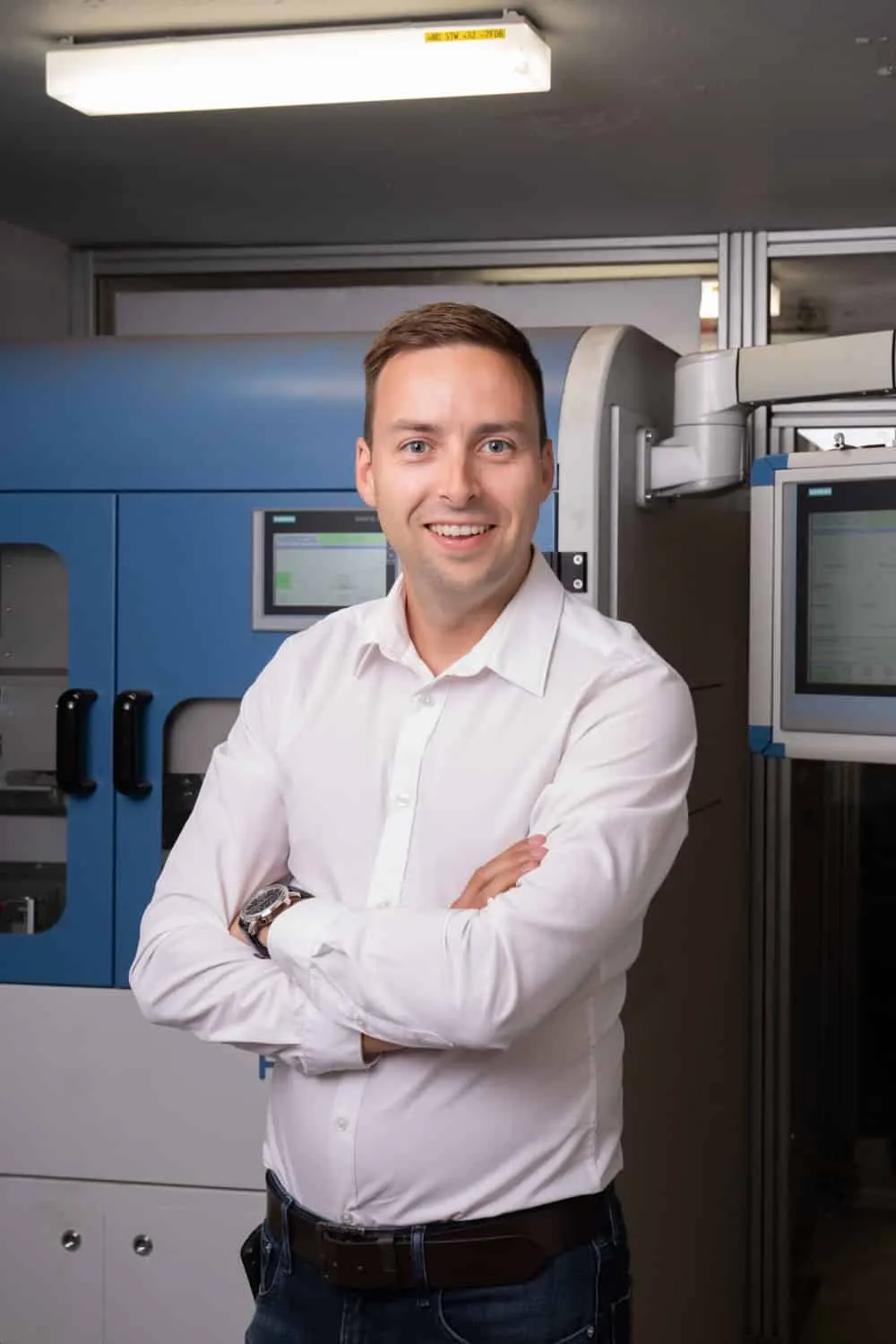
LIMS as an Important Pillar of Digitization
Managing data is only half the story. The real value emerges when measurement data turns into actionable insights for process optimization.
Detect Trends Early
Long-term evaluations reveal patterns that day-to-day operations would otherwise miss.
Reveal Dependencies
Correlations between melt, alloy and end product become visible and addressable.
Counter Skills Shortages
AI, automation and professional data management ease the workload on scarce specialists.
„Topics such as artificial intelligence, automation and professional data management in the form of a LIMS will certainly occupy us even more intensively in the steel industry in the future. It is becoming increasingly difficult to recruit trained specialists for our industry. Targeted process automation in the steel and rolling mill can counteract this problem – at least to some extent.“Marco LacknerHead of Quality Assurance · Marienhütte GmbH
A Decisive Gain in Knowledge – Thanks to the Merge Function
According to Marco Lackner, the LIMS provides the greatest benefit when combining data from different sources. At Marienhütte, the analysis results of a batch in the steel mill are merged with the mechanical parameters of the rolling mill and evaluated together.
All results of the entire manufacturing and rolling process can be displayed with batch accuracy in a single click – including a traceable history across every production step.
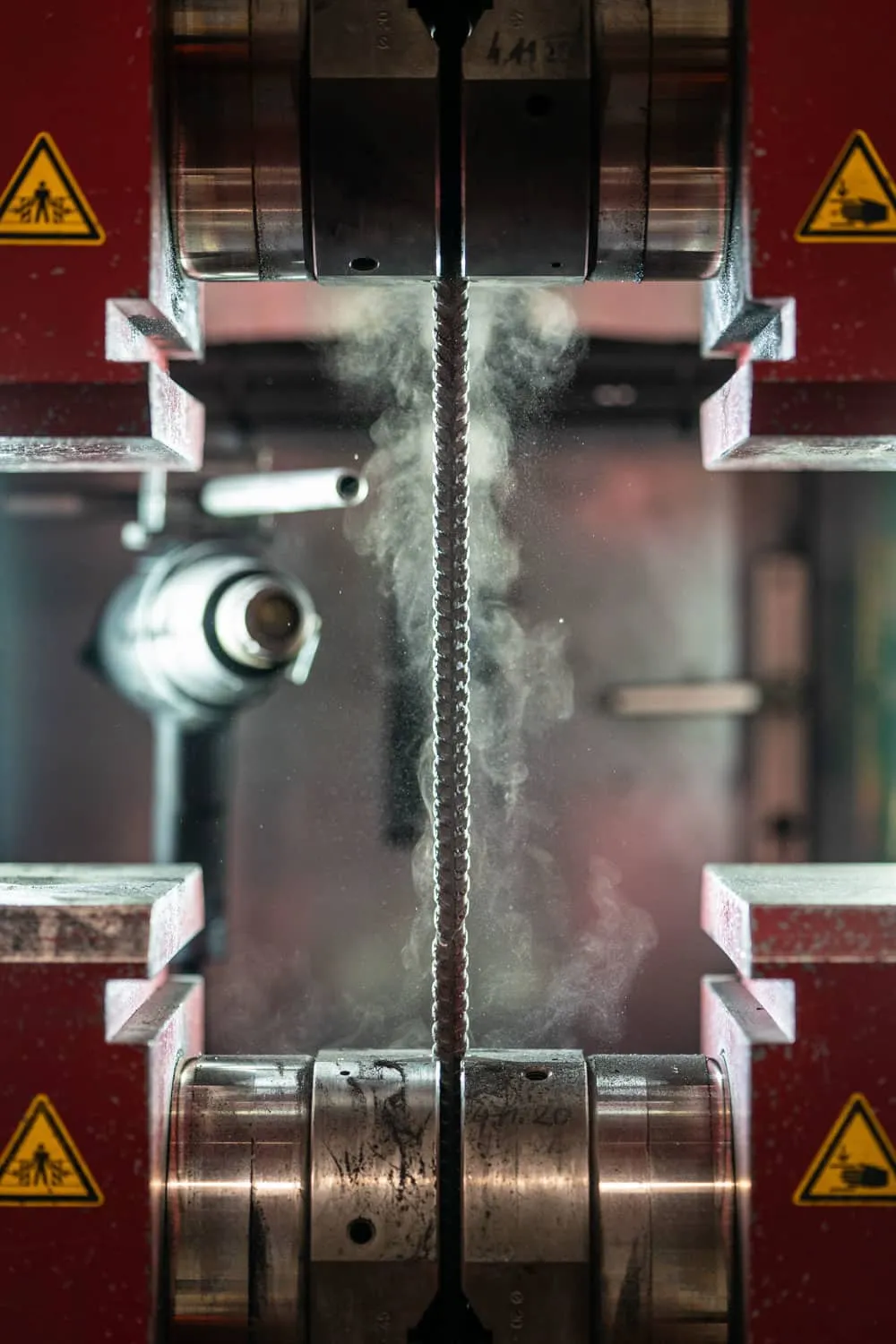
„The complete production process can be traced this way – it provides us with insights we no longer want to do without.“Marco LacknerHead of Quality Assurance · Marienhütte GmbH
What Has Changed Since 1994
Before LIMS
- Manual management of large data volumes
- Growing requirements hard to map
- Cumbersome batch-level traceability
- No systematic trend analysis
With [FP]-LIMS
- 35,000 analyses per year managed cleanly
- Full, audit-ready documentation
- Batch-level traceability at one click
- Data fusion between steel and rolling mill
Bring Your Steel Production to the Next Level?
See in 30 minutes how [FP]-LIMS can support your quality assurance, audit documentation and process optimization in the steel industry. Free, no sales pressure.